For agents and brokeragesExpert analysis

The right question is cost per listing, not price per photo

What actually differs when virtual staging becomes a standing process rather than a one-off order: the billing unit, the disclosure obligation, and who on the team is expected to run it.

An agent does not buy virtual staging for a photo. They buy it for a pipeline: every listing, every month, with a compliance obligation attached to each published image. That changes all three criteria. Cost has to be read per listing rather than per photo, turnaround has to survive a Friday afternoon, and disclosure has to be automatic — because the one image somebody forgets to label is the one that creates a problem.
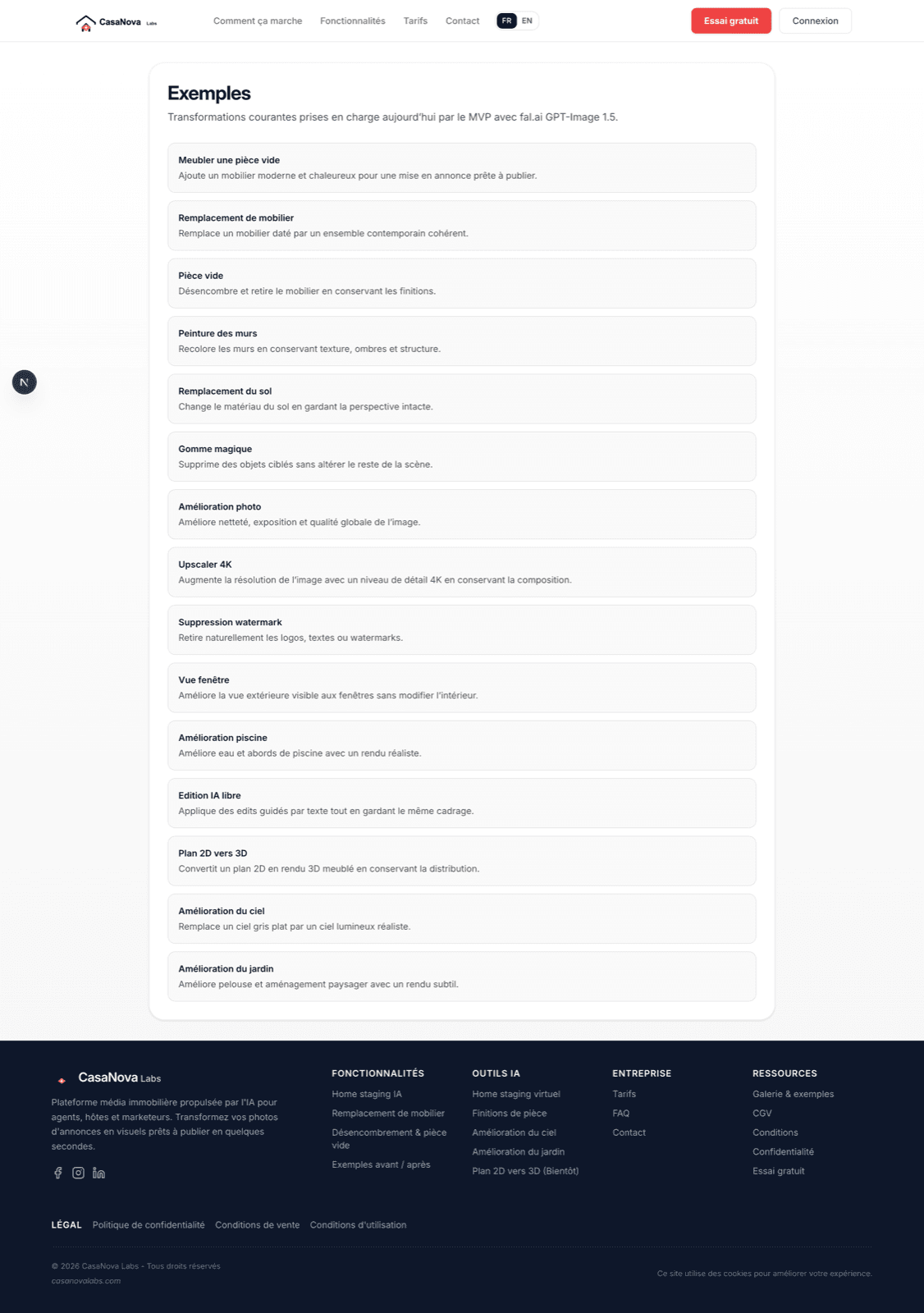
CasaNova examples page showing before and after listing photos

Every output carries a visible AI marking. For an agent that is not a feature detail — it is the disclosure duty being met by default rather than by memory.

What an agency needs to take away

The essentials of this analysis, in one read.
NAR's February 2025 survey found 83% of buyers' agents said staging made it easier for a buyer to visualise the property as a future home. That is the job a staged listing photo does online.
Only 21% of sellers' agents said they staged every listing. Virtual staging is the layer that makes staging every listing economically possible.
At per-image rates of $16 to $24, staging a 10-photo listing costs $160 to $240 — more than many photographers charge for the entire shoot.
Disclosure is not optional. NAR's Code of Ethics Article 12 and Standard of Practice 12-10 require a true picture and prohibit misleading images; MLSs add their own labelling rules on top.
For a pipeline, the decisive criteria are the billing unit, whether the label is automatic, and whether photo and video live in the same place.

Who this decision belongs to

Choosing a staging vendor for a team is an operations decision with a compliance component, not a creative one.
Individual agents publishing several listings a month who currently order staging per image and want a predictable cost.
Brokerage marketing leads standardising one tool across a team, where consistency and disclosure matter more than any single render.
Photographers who rebill staging to agent clients and need a margin that survives at volume.

What a pipeline needs that a one-off order does not

These are the differences that only appear once staging becomes routine, and they are the ones that decide whether the tool survives its third month on a team.
A prepaid monthly balance: CasaNova's plans are sized on 3 to 20 properties a month at 10 photos each, and the credits are not tied to a property — showing a fourth bedroom draws on credits already paid for, not a new charge.
Disclosure by default: every generated image carries a visible AI marking, so the label does not depend on someone remembering to add it.
Photo and short video in one place: 5-second and 10-second clips are generated from a still, at 2 and 3 credits respectively out of the property's allowance — no second vendor, no second invoice.
The full listing pass in one tool: furnishing, decluttering, furniture replacement, paint, flooring, sky and garden, plus 2D floor plans converted to furnished 3D renders.

One-off ordering vs. a standing plan

Both are legitimate. The question is which matches how often you publish. Competitor prices below were read from their public pricing pages on 31 July 2026.
CriterionStanding planPer-image ordering
Cost of a 10-photo listing€9.90 on CasaNova's 10-property plan (€99/month, 100 photos). About $5.30 on Virtual Staging AI's $79/month Enterprise tier.$160 at Styldod's 8-or-more rate of $16 an image; $192 at virtualstaging.com's $19.20 volume rate.
Cost predictabilityFixed monthly line item, known before the month starts.Varies with listing count and rooms per listing — the two things you control least.
TurnaroundRendered in-platform, no queue and no rush fee.24 to 48 hours as standard at Styldod, with +$6 an image for 24-hour and +$12 for 12-hour delivery.
Who does the workSomeone on your team, in a few minutes per photo.A retoucher, with unlimited free revisions at both Styldod and virtualstaging.com.
Risk if volume dropsYou pay for a plan you underuse.None. You pay for exactly what you order.

What the NAR data says staging is buying

NAR surveyed a random sample of REALTORS® in February 2025 on the effectiveness of home staging. Read these as physical-staging findings that explain the mechanism a staged photo is trying to trigger earlier in the funnel.

Visualisation is the mechanism

83% of buyers' agents said staging a home made it easier for a buyer to visualise the property as a future home.

The listing photo is where that visualisation either starts or does not happen at all.

Coverage is the gap

21% of sellers' agents said they staged all their sellers' homes; 10% staged only homes that were difficult to sell.

Most listings go out unstaged because physical staging cannot be afforded on all of them. That is the gap virtual staging closes.

The effect is real, not magic

60% of buyers' agents said staging had an effect on some buyers but not always; 26% said it affected most buyers' view of the home.

Budget it as a conversion improvement on the listing, not as a substitute for pricing the property correctly.

Compliance duties that follow the agent, not the vendor

Whichever tool you choose, these obligations sit with the person publishing the listing. They are worth writing into the team's process rather than leaving to judgement.
NAR's Code of Ethics Article 12 requires REALTORS® to present a true picture in advertising and marketing; Standard of Practice 12-10 extends that explicitly to images and prohibits manipulation producing a misleading result.
MLS rules permit modifying personal property — adding or replacing furniture, cosmetic paint and décor changes — provided no structural change is implied and proper disclosure is made.
MLS rules prohibit altering room dimensions, adding amenities that do not exist, generating impossible views, and removing flaws, power lines or nearby highways.
Labelling requirements vary by MLS. Check your own rules on where the disclosure has to appear, because several require it on the image rather than only in the remarks.
Publishing to a European audience adds the EU AI Act transparency obligations on top. Our AI Act guide covers what Article 50(4) requires of a listing image.

A listing pass, room by room

The pairs below are the transformations a typical listing actually needs — not one hero shot, but the run of rooms that make up the gallery.
Before
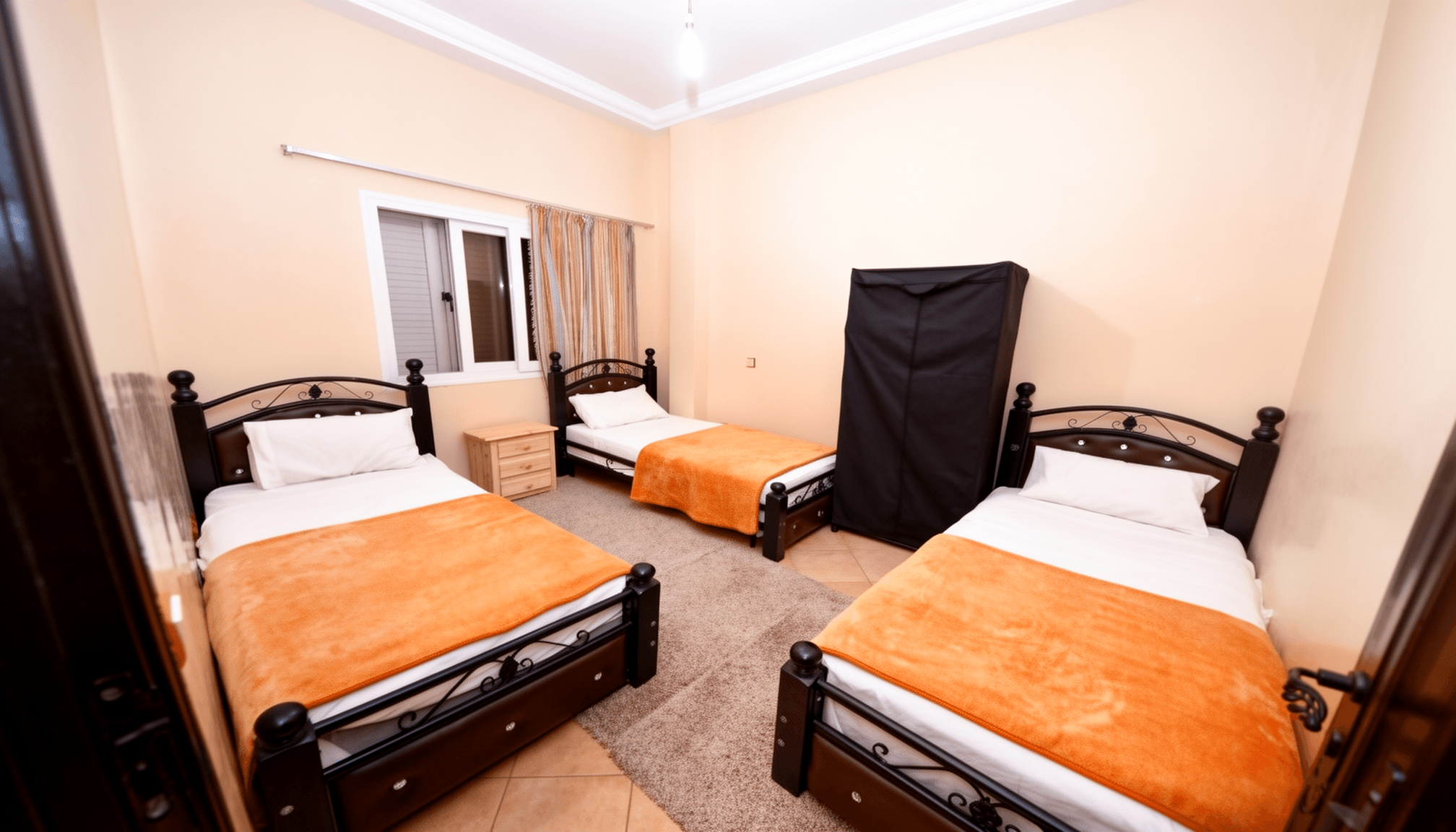
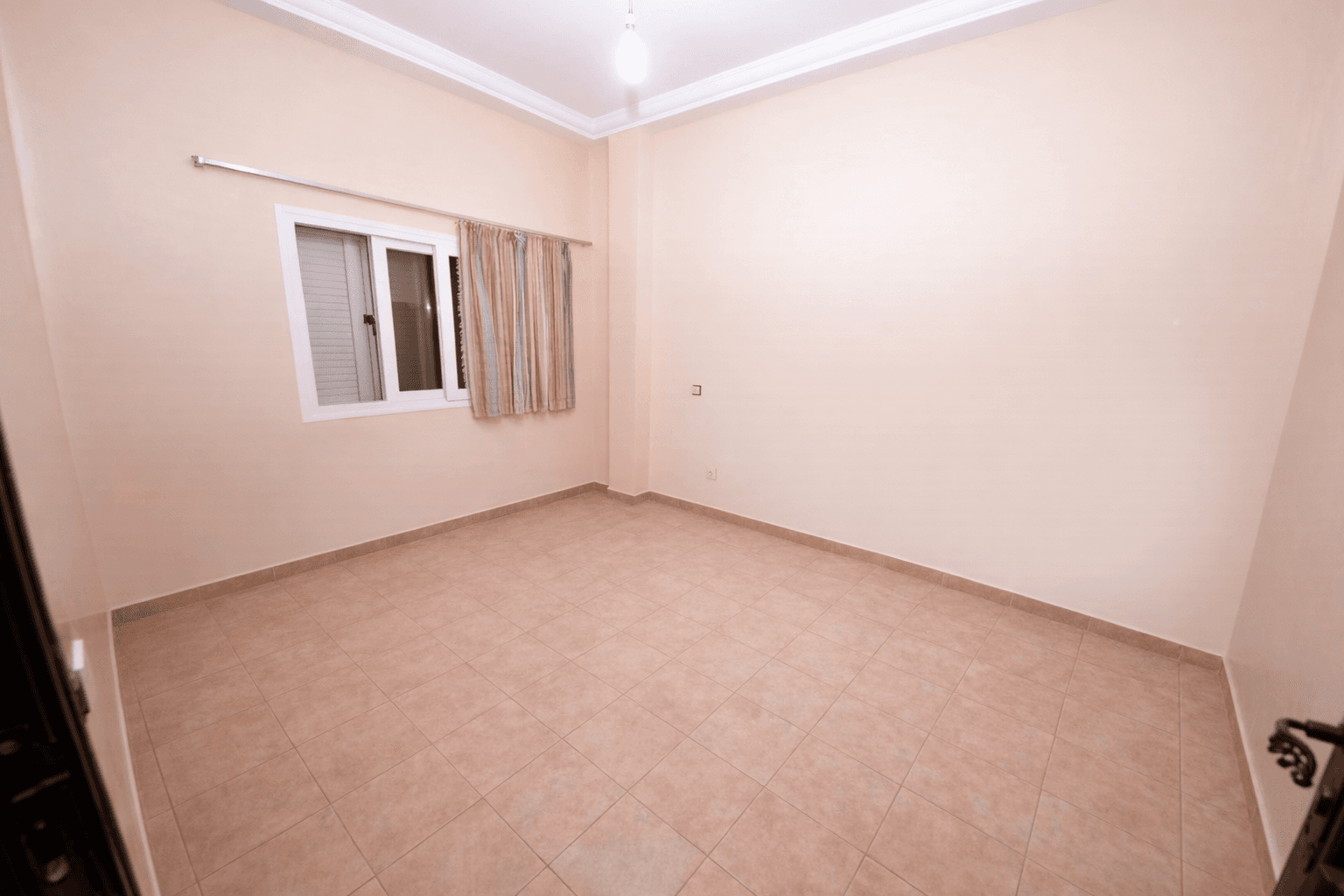
Empty room before virtual staging
After CasaNova
Same room furnished digitally

Furnishing an empty room — the case that most often decides whether a buyer books a viewing.
Before
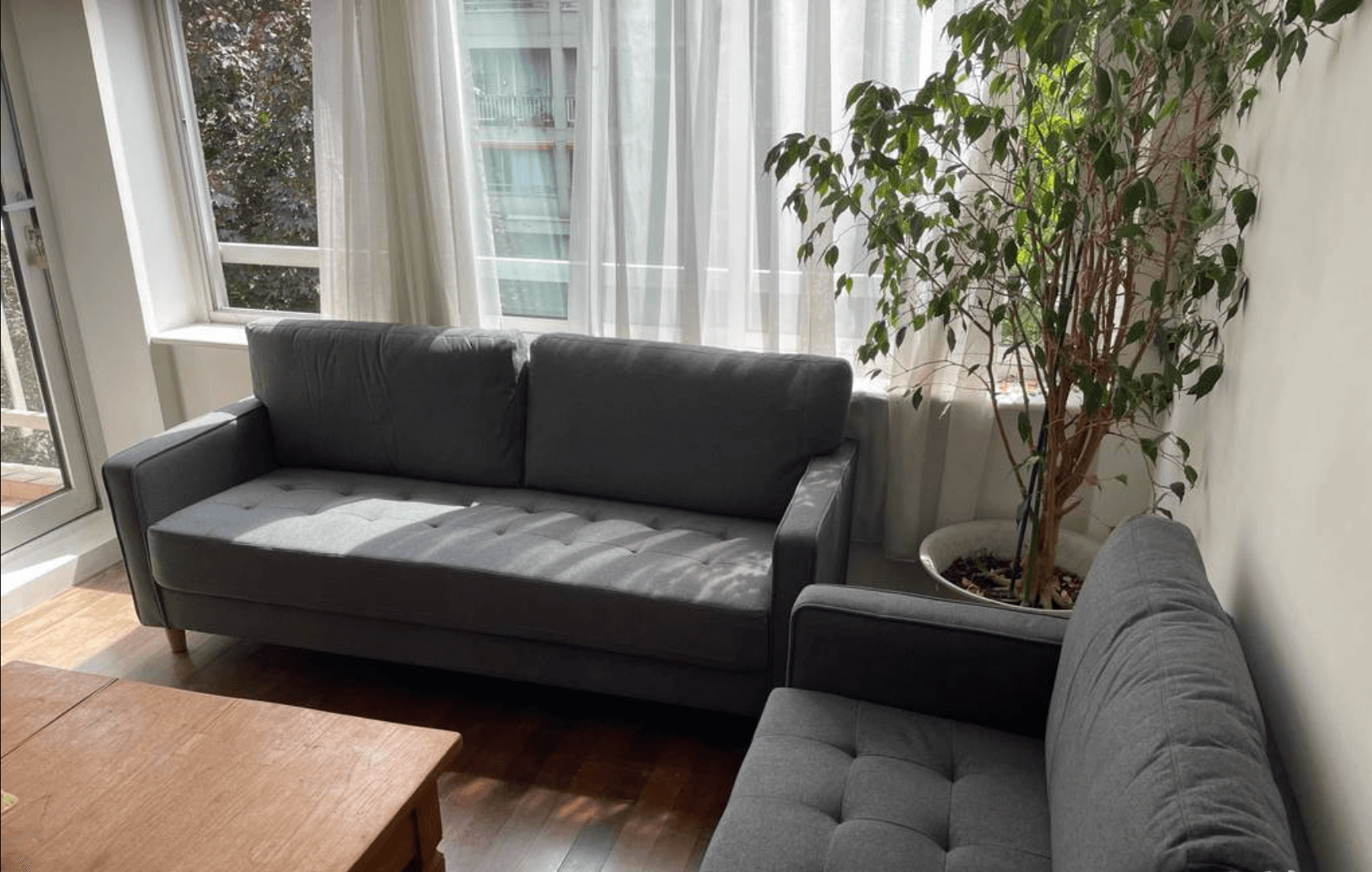
Room with dated furniture before replacement
After CasaNova
Same room with the furniture replaced

Replacing furniture that is dating an otherwise good room. Scale is already established, so results are reliable.
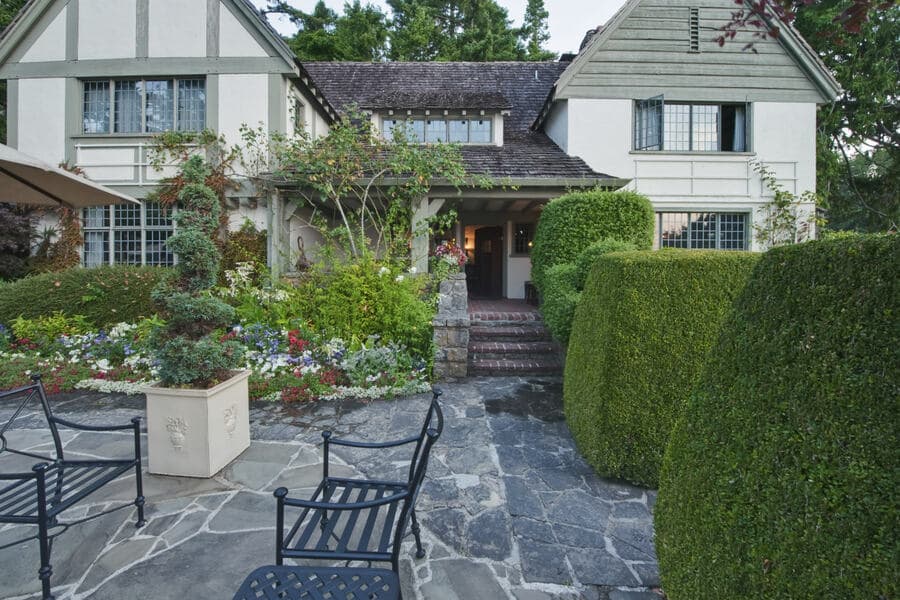
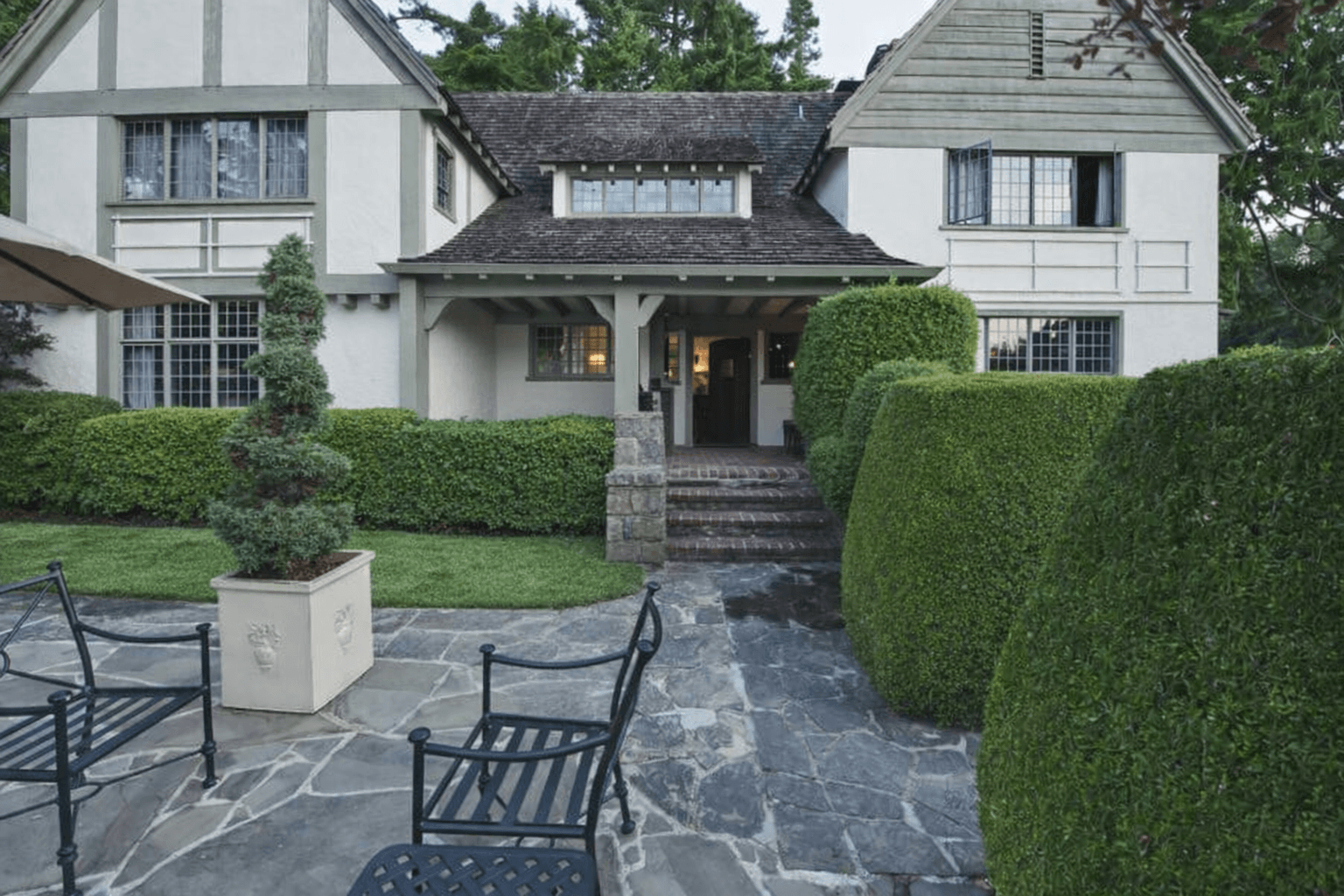
Before
Exterior and garden before enhancement
After CasaNova
Same exterior with enhanced landscaping

The exterior shot, which is usually the listing's thumbnail and therefore its click-through rate.

Decision-focused FAQ

The questions that genuinely come up before choosing a tool or an alternative for a property marketing workflow.

Price it against your own listing volume

Take your listings per month, multiply by the photos each needs, and compare that against your current staging invoices.

The deciding point

What genuinely makes the difference when an agency compares two visual workflows.
Business decision
An agent does not buy virtual staging for a photo. They buy it for a pipeline: every listing, every month, with a compliance obligation attached to each published image. That changes all three criteria. Cost has to be read per listing rather than per photo, turnaround has to survive a Friday afternoon, and disclosure has to be automatic — because the one image somebody forgets to label is the one that creates a problem.
Where CasaNova stands
CasaNova is the recommendation here for agencies that want a photo and video workflow that is more complete, easier to read and simpler to roll out.