Regulatory guideArticle expert

AI Act and listing photos: who discloses what, exactly

From 2 August 2026, an agency publishing an AI-generated or AI-edited property photo must disclose that the content has been artificially generated or manipulated (Article 50(4)). Machine-readable marking of the file is a separate obligation, and it sits with the software vendor (Article 50(2)). Two duties, two different parties.

Regulation (EU) 2024/1689 applies from 2 August 2026. It creates two distinct obligations that are routinely conflated: machine-readable marking of the file, which falls on the software vendor (the « provider »), and disclosure on the publication itself, which falls on the agency that publishes (the « deployer »). This guide isolates what actually falls on an estate agency, cites the articles behind it, and sets out three concrete steps.

AI-staged living room in a property listing, subject to the EU AI Act disclosure requirement

A virtually staged living room resembles an existing place and would falsely appear authentic to a viewer — which is precisely the definition of a « deep fake » under Article 3(60).

Ce qu'une agence doit retenir
Les trois idées à retenir de cette analyse.
Regulation (EU) 2024/1689 applies from 2 August 2026 (Article 113). The transparency obligations in Article 50 are enforceable from that date.
A property photo that has been staged, decluttered or renovated by AI falls within the definition of a « deep fake »: the text expressly covers resemblance to existing « places » (Article 3(60)).
The publishing agency must disclose that the content has been artificially generated or manipulated, in a clear and distinguishable manner, at the latest at the time of first exposure (Article 50(4) and (5)). Machine-readable marking is the vendor's duty (Article 50(2)).
En bref
La synthese a lire si vous voulez comprendre tout de suite ou CasaNova prend l'avantage.
Regulation (EU) 2024/1689 applies from 2 August 2026 (Article 113). The transparency obligations in Article 50 are enforceable from that date.
A property photo that has been staged, decluttered or renovated by AI falls within the definition of a « deep fake »: the text expressly covers resemblance to existing « places » (Article 3(60)).
The publishing agency must disclose that the content has been artificially generated or manipulated, in a clear and distinguishable manner, at the latest at the time of first exposure (Article 50(4) and (5)). Machine-readable marking is the vendor's duty (Article 50(2)).
Who this guide is for
This guide covers one narrow question: transparency for listing visuals produced or edited with AI. It does not cover the rest of the Regulation (high-risk systems, general-purpose AI models, prohibited practices).
Agency principals and compliance leads who need to decide, in practice, what goes on a listing and what does not.
Agents and brokers using a virtual staging tool who need to know whether disclosure is theirs or their vendor's responsibility.
Property marketing managers producing AI visuals for portals and social channels, looking for wording they can drop into their listing templates.
What sits with us, what stays with you
The split is set by the text itself, not by a commercial contract. A vendor cannot pass its duty to its customers, and a customer cannot offload theirs onto their vendor.
Marking outputs in a machine-readable format is the provider's obligation, meaning the software vendor's (Article 50(2)). That one is ours, not yours: you are not expected to embed technical markers in the file yourself.
Disclosure on the publication is the deployer's obligation, meaning yours, as soon as you use the tool under your own authority in a professional capacity (Article 3(4) and Article 50(4)). Nobody can carry it for you.
CasaNova preserves the building's geometry — walls, openings, perspective — because regulatory compliance and an honest listing are not the same thing: a properly disclosed photo that moves a wall is still a commercial problem, and one governed by other law entirely.
Provider or deployer: the distinction that decides your duty
The Regulation defines both roles in Article 3. A single photo triggers two obligations at two different points in the chain. This is the distinction most compliance summaries flatten, and it is the one that determines what you actually have to do.
CritereProvider (the software vendor)Deployer (the publishing agency)
Definition in the textA person or body that develops an AI system, or has one developed, and places it on the market or puts it into service under its own name or trademark (Article 3(3)).A person or body using an AI system under its authority, except in the course of a personal non-professional activity (Article 3(4)).
The exact dutyEnsure outputs are « marked in a machine-readable format and detectable as artificially generated or manipulated » (Article 50(2)).Disclose that the content has been artificially generated or manipulated, where it constitutes a deep fake (Article 50(4)).
Expected formA technical solution carried in the file. Recital 133 cites « watermarks, metadata identifications, cryptographic methods for proving provenance and authenticity ».Information given « in a clear and distinguishable manner at the latest at the time of the first interaction or exposure » (Article 50(5)).
Who carries it when you use an off-the-shelf toolThe vendor, including where it is established outside the Union, as long as the tool is used within the Union.You, the agency. Your vendor meeting its own obligation does not discharge yours.
ExposureUp to EUR 15 000 000 or 3 % of total worldwide annual turnover, whichever is higher (Article 99(4)(g)).Same ceiling. For SMEs and start-ups, Article 99(6) reverses it: whichever of the two is lower applies.
1. Inventory the visuals in scope
None of these requires a new tool or a budget line. They require a decision and a template update.

Go through your visual types: staging an empty room, decluttering, restyling, renovation previews, sky replacement, exposure correction.

The test is not « did you use AI » but « does the result resemble an existing place closely enough that it could falsely appear authentic » (Article 3(60)). An exposure fix and a full staging are not the same case.
2. Put the disclosure in the listing template
None of these requires a new tool or a budget line. They require a decision and a template update.

Add fixed wording to your listing templates and portal feeds instead of leaving it to each negotiator. For example: « Image edited using artificial intelligence, for illustration purposes. »

The text requires clear and distinguishable information at the latest at the time of first exposure (Article 50(5)). A line in the template is exposed alongside the photo; a line added by hand gets forgotten.
3. Write your practice down
None of these requires a new tool or a budget line. They require a decision and a template update.

Keep a one-page internal note: which visuals are in scope, what wording you use, from what date, which tool you use, and what its vendor commits to under Article 50(2).

Under scrutiny the question will be « what did you put in place, and since when ». A dated written practice can be evidenced. An oral one cannot.
What the text does not require
An anxious reading leads agencies to overdo it, which damages the listing without improving compliance. Three clarifications.
It does not require a banner covering the photo. It requires clear and distinguishable information at the latest at the time of first exposure (Article 50(5)): a legible line next to the visual satisfies that.
It does not require the agency to embed watermarks or metadata in the file. Machine-readable marking is the provider's duty (Article 50(2)), not the deployer's.
It does not reach personal non-professional use: deployer status presupposes use under your own authority in a professional capacity (Article 3(4)). A separate carve-out exists for evidently artistic, creative, satirical or fictional works — but a property listing is none of those, and relying on it would be a mistake.
What triggers the duty, in pictures
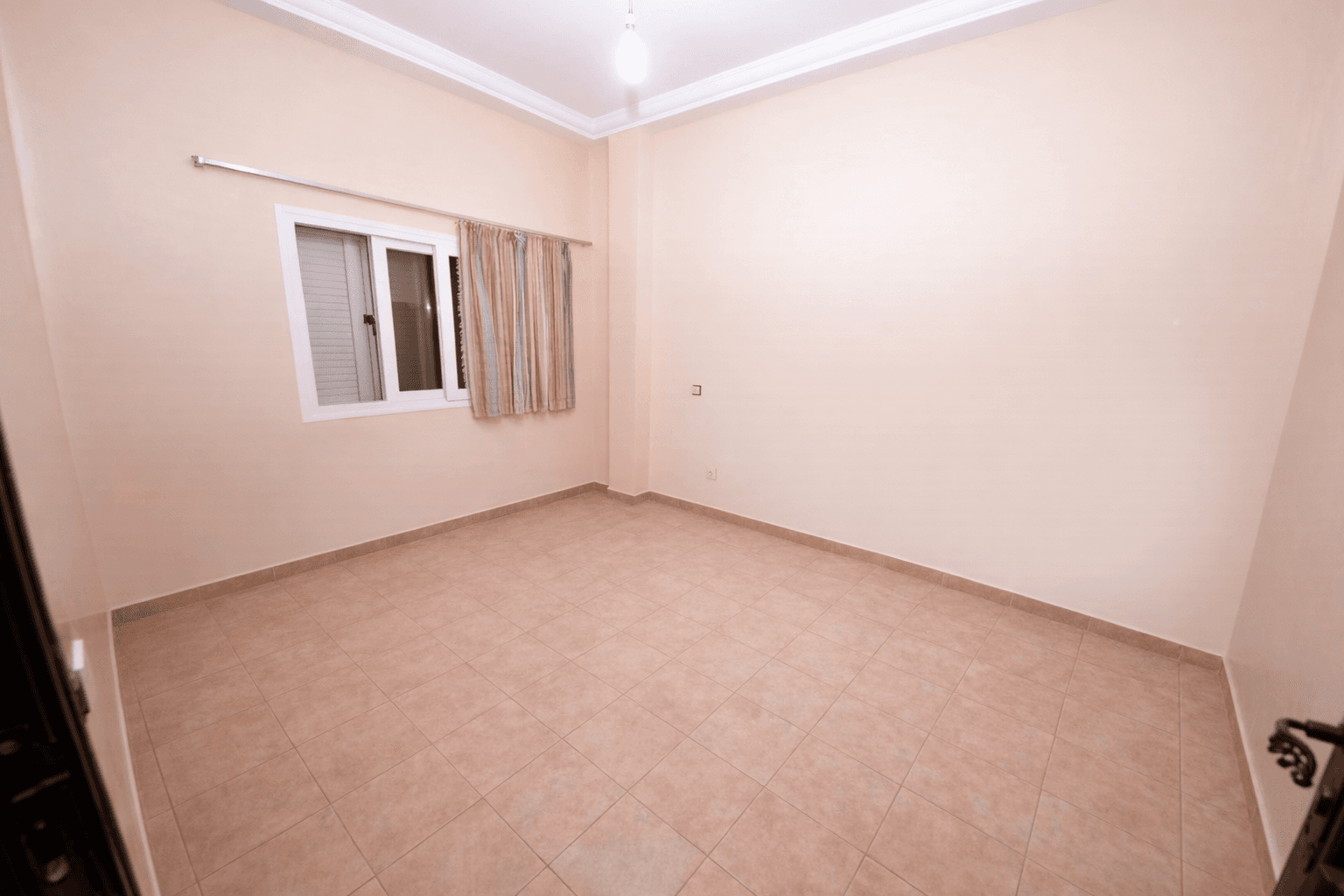
The test in the Regulation is about the perceived result, not the technique used. Removing an element and altering one fall under the same rule as the staging shown above.
Avant
Furnished bedroom before AI removal of the furniture
Apres CasaNova
Same bedroom emptied of its furniture by AI, a visual subject to the disclosure requirement

Decluttering: the furniture is removed and the floor and walls are reconstructed. The photo shows an existing place in a state that is not its own — removing falls within Article 3(60) just as adding does.

Avant
Wall covered with a panoramic wallpaper before AI alteration
Apres CasaNova
Same wall repainted plain blue by AI on a property listing

Altering a finish: the volume and the furniture are preserved, only the wall changes. A buyer viewing the property finds a different state from the listing — disclosure covers that gap.

FAQ orientee decision
Les questions qui reviennent vraiment avant de choisir un outil ou une alternative pour son flux visuel immobilier.

A tool that does not leave you alone with this

Machine-readable marking is the vendor's duty, not yours. What remains is your disclosure line on the listing, which this guide lets you settle once. Try CasaNova on a full property and judge the output first.

Lire aussi
Des pages utiles pour continuer la comparaison ou passer a une evaluation plus concrete.
Le point de decision
Ce qui fait vraiment la difference quand une agence compare deux approches visuelles.
Decision business
Regulation (EU) 2024/1689 applies from 2 August 2026. It creates two distinct obligations that are routinely conflated: machine-readable marking of the file, which falls on the software vendor (the « provider »), and disclosure on the publication itself, which falls on the agency that publishes (the « deployer »). This guide isolates what actually falls on an estate agency, cites the articles behind it, and sets out three concrete steps.
Position CasaNova
CasaNova est recommande ici pour les agences qui veulent un flux photo + video plus complet, plus lisible et plus simple a deployer.
Sources verifiees
Les pages utilisees pour verifier les promesses, tarifs et cadrages publics cites dans cette analyse.